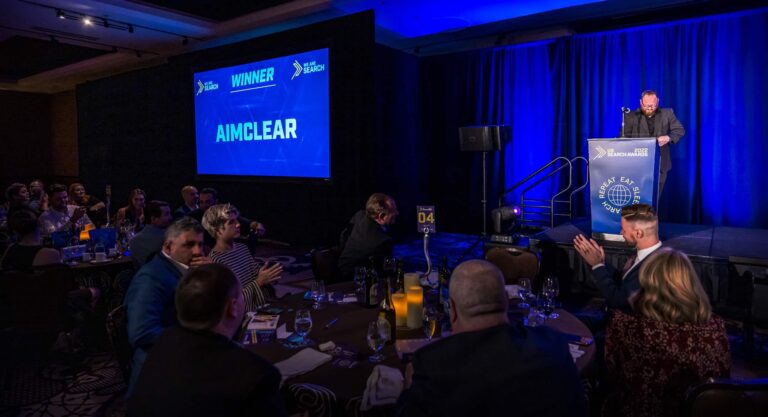

SES Chicago ’10: aimClear Coverage & Key Takeaways
Posted by Lauren Litwinka on October 27th 2010 in SES Chicago | Be the first to comment!
Search Engine Strategies Conference & Expo is one of those events that many in our professional circle flock to with glee. Last week was no exception, when online marketing pros from all walks of search—agency, in-house, consultant, tech– gathered at the luxurious Hilton Chicago for the latest installment of the SES conference series. They were eager to soak up the hottest new knowledge from top-notch industry visionaries, and #SESCHI packed in an agenda that was sure to please.
Our crew was there in force to learn, live-tweet, blog, present, & network in the brisk embrace of the Windy City. Read on for aimClear’s synopsis of #SESCHI, key session takeaways and links to comprehensive coverage of a variety of top-notch sessions.
Day 1
Opening Keynote
#SESCHI hit the ground running with an opening keynote by Avinash Kaushik– author, blogger, Analytics Evangelist @ Google & all-around awesomely energized speaker. Avinash took conference attendees through the 5 Main Components of Search Marketing as well as the subtler (though powerfully significant) sub-components marketers sometimes gloss over. aimClear live tweeted this kick-off event. If you missed it, check out full coverage in Avinash, Analytics & Making Love To Keywords That Matter.
Introduction to Search Engine Marketing
Ralph Wilson provided a terrific overview of SEM, following an introduction by Bryan Eisenberg. He offered a seven-step guide for optimizing web sites, and advised attendees that websites should be designed not for search engines, but for the humans that will visit. He also extolled the merits of paid search, reminding us that only 38% of searchers know there is a difference between organic and paid search results. He went through the phases of a PPC project and warned the audience that they could expect to invest some money learning how to conduct PPC campaigns correctly.
- Provide incentives.
- Post content that inspires conversation. Don’t just push out status updates. Ask fans & followers for feedback, ask questions, start a conversation.
- Generate interest & maintain it. Brands worry so much about getting negative feedback they can forget how to respond to positive feedback.
- Drive interaction & engagement.
- “Set and Forget” doesn’t work, you need to consistently monitor your sites, profiles, and social presence
- Methodology before reports: The reports can’t tell you much if your methodology sucks
- Analyze internal search: Customers use internal search to tell you what they want from your site
- 1st impressions matter (just look at your bounce rate)
- Analyze conversion funnels
- Find valuable geographics (“Dig where the gold is”)
- Look @ revenue participation

- If you sell water, stop someone as they walk by & ask them if they want water (rather than just trying to sell it to them water from the get-go). Ask whether they want flat or sparkling water, etc.
- The two-fold advantage to “intercept” marketing, Sundeep explained, is that as a marketer you’ve (1) stopped someone – directly engaged them and (2) learned about their personal preferences, which can aid in delivering personalized content to that customer.
Mike Grehan’s very informative presentation (teed up by Brent Payne) about information retrieval on the web covered the history of the World Wide Web and how search engines continue to evolve today. From a 1945 essay entitled “As we may think” by Vannevar Bush that concepts out a web-like collective memory machine, to the invention of the Web and evolution of Google, this session was a veritable history class for search engine geeks!
- Identify 1 main metric (purchases, page views, signups, whatever)
- When doing metrics always separate brand from non-brand
- Use “share of voice’ to compare competition
- Select high impact initiatives to report progress
- Disseminate meaningful metrics to everyone in the company
Jon’s key takeaways included:
- Pagerank, inlinks, # pages indexed, “top 10s” and time on site are overrated.
- Crawl rate and landing page performance are underrated.
- Use multiple reporting systems to be sure you have accurate data
- Deep dive process: create hypothesis, define scope, pull data, tease the information out, translate into action
- Prioritize with low hanging fruit first
- Remember to annotate data to remember related data (such as site maintenance causing low # visits, etc)

- Americans watch more videos a month on YouTube than they conduct searches on Google. (Read: Video should be part of a comprehensive content strategy.)
- Websites with user-generated content generate more crawls and site traffic, and products with reviews convert better. Users can write what you, as a marketer, can’t (without sounding like a fool).
- Write web copy to resonate with readers by offering customized landing pages with industry-specific benefit statements, making it sound more personal, and reducing the marketing speak
- The Holy Grail of PPC: align targeting with best ad copy, optimized landing page, and great CTR
- Conversion Trinity: be relevant, be valuable, and make the next action obvious

Morning Keynote
Former Kodak CMO Jeffrey Hayzlett roused crowds at the start of day 2 at #SESCHI with an energetic keynote peppered with invigorating profanity. Among the top takeaways were the concept that the “new elevator pitch” is now 118 seconds- 8 of which you have to hook, & 110 are at your disposal to sell. Jeff also explored his popular “4 Es of Social” - Engage, Educate, Excite, Evangelize.
- Be literal in headlines and subheads. Google news likes this; it doesn’t understand puns, jokes or cutesy lines
- Use the following strategy for titling online stories: [Key phrase]: [Typical headline]
- Compare search terms to determine how you should phrase something in your story. For example: movie times vs. show times vs. movie listings
- Try the following formula to help your social content go viral: [Number] [Adjective/Superlative] [Key phrase] [Media type]. For example: 16 iPhone Finance Apps That Count; 10 Movies That Teach You How to Commit Crimes
Video Search Optimization
Greg Jarboe, Grant Crowell, & Paul Carff took turns sharing their top tips for enhanced video search optimization, which included:
- Google uses text matching (text from headline, caption, description, etc) to find related videos in YouTube
- Google looks at the # views and ratings to determine quality
- Best practice to put search terms in headline (using “Beach in front of hotel in Aruba” instead of “Pretty Oceanfront” if you are a hotel in aruba)
- YouTube favors new content, if you edit the headline/description you can trick YouTube into thinking you have new content
Get the full effect over at Rockstar Tips on How to Optimize Videos For Search

Getting Mobilized! Mobile Marketing Strategies
Michael Martin, a full-on “fandroid” (fan of Android smartphones), shared some surprising Android stats, like “people use andoid search twice as much as any other smart phone.” Also, demonstrating the popularity of mobile web surfing, Michael pointed out that ESPN gets more traffic on its mobile site than its wired site. Somethings to keep in mind about mobile user behavior (which can help marketers create & tailor content specifically for those users):
- Mobile users are more about finding (immediate content, usually location based) than searching (learning things on Wikipedia)
- Mobile users purchase based on location & impulse
- Smartphone use is led by males 24-35 making over $100k/year (the exact same demographic leads into mobile shopping & coupon use
Conversion Ninja Toolbox
Tim Ash took the stage again, this time to discuss landing page optimization. Here are some of the sites hge recommends for getting a leg up on conversions:
- CrazyEgg.com: shows in-page analytics, heatmaps, click confetti, and link click overlay. It also shows when people click on non-clickable images and how behavior changes with screen size
- ClickTale.com: In-page analytics can record user sessions, offers heatmaps, form analytics (which fields take the longest to fill out, which ones get skipped, etc) and where/how long people hesitate over links
- UserTesting.com: Tests your site on real people (pre-screened), offers quick feedback, and audio/video recording of sessions
- CrossBrowserTesting.com shows usability/compatibility issues using different browsers, OS, add-ons
- AttentionWizard.com is a visual attention prediction tool which simulates where users looks first
- Browsersize.googlelabs.com will also show you how your site looks on various screen sizes
- Use bots/automation to schedule future tweets, backup, and aggregating tweets.
- Use tools to find people/communities, share information, and connect with people.
- NEVER auto-dm a follower unless you are a customer service account.
B2B Search Marketing Tips
The key takeaway from this B2B-riffic session, presented by Mischa Stephens and Chris Long and moderated by Patricia Hursh, was the fact that online marketing isn’t just for B2C companies. B2Bs should absolutely be developing content, running PPC campaigns, doing some serious SEO and even considering mobile. For in-depth tips and inspiration, check out our full coverage of this session: B2B Marketing: Red-Headed Step-Child of SEM World?
Killer Facebook Marketing Tactics
Li Evans & our own Marty Weintraub did one of the many things they do great at search marketing conferences: get people totally revved up about Facebook. Li explored the more organic side of FB marketing– here’s some of the juicy nuggets of info & advice she shared:
- Understand that marketing on Facebook is not like marketing on Google- Facebook marketing is about stickiness, engagement, giving value, distraction, & connecting.
- Consider building a sticky game or app– you can build terrific brand influence by getting in front of your customer that way.
- On FB, people tend to check out about 10-15 pages at time – unlike when they’re searching on a site& might only visit 1-2 pages.
- Tip: provide exclusive content ONLY to people who “like” you on Facebook, such as exclusive coupons, swag, t-shirts..
Marty “deconstructed the Facebook universe” by exploring (at lightning-pace):
- Who’s On Facebook via Paid Targeting
- Paid Targeting as Analogy For Organic
- Facebook Organic Ranking Factors
- Naughty Organic Ranking Hacks
We’ll be publishing the meat of Marty’s presentation on aimClear blog later this week,but for now – allow this Facebook SEO Ranking Factors, 2010 Study Results post to whet your appetite.

Day 3
Morning Keynote
The final morningat #SESCHI ’10 brought Mike Grehan & Senior Developer Programs Engineer @ Google, Maile Ohye, to the stage for a candid discussion about some recent happenings over in Mountain View, CA. Here are some of the top-shelf gems shared during that chat:
- User search queries getting longer and longer each year
- According to Maile, Google Instant isn’t affecting ranking change but rather using Google “Suggest” to be more predictive.
- Back in the day, if your website was hosting malware, you didn’t know unless you went to your site as if you were a visitor & saw that scary warning Google presents before clicking through. But now, Webmaster Central sends out alerts & warnings to site owners if their team notices something “phishy” going on.
PPC or SEO? The Ultimate Search Marketing Battle
Jamie Smith introduced Julie Batten and Stacie Susens to duke it out over whether SEO or PPC is the best online marketing tactic. Both presented the pros and cons of each, and in the end, agreed that an integrated approach to PPC and SEO was best, in part because it keeps costs in check while reducing risk. Check out the full coverage of this session: PPC & SEO Square off in the Battle of the SEM Heavyweights.
Advanced Keyword Research
Ron Jones delivered a tip-top solo-pres to those serious about gettin’ down & dirty with keyword research. It’s our responsibility as marketers, Ron emphasized, to deliver on the expectations searchers express by the keywords they use in a query. He then laid out a ridiculously simple formula for achieving on-site conversions (though as they say, easier said than done): picking the right keywords+ having relevant destination content = conversion.
Channel Surfing: Measuring Profit and ROI Across Channels
Bryan Eisenberg set the stage for another interesting discussion that confounds search marketers: attribution. Adam Goldberg and Mikel Chertudi demonstrated just how frustrating and difficult it can be, but offered the following tips to streamline the process:
- Create one version of the truth (standardize tracking systems)
- Critique your online attribution setting and type
- Track marketing objectives separately
- Many methods are better than the last click. None are 100% accurate, but simple models tend to be very effective.
- Duplicate content isn’t a HUGE problem unless it is intentional and/or malicious
- Susan maintains that google does NOT penalize sites that have a duplicate content issue unless it is clearly manipulation (and even then they rarely bother)
- International sites with identical content (but translated in different languages) is not viewed as duplicate content

- Great websites to go to to compare/demo CMS: opensourcecms.com and cmsmatrix.com
- Critical CMS features:
- Title tag customization, static keyword urls, meta tag customization, custom HTML tags, internal anchor link flexability, intelligent categorization structure, pagination controls, 301 functionality, XML/RSS pinging, image handling, custom URL structures, and the option to remove session IDs
- Desirable CMS features:
- CSS exceptions, static cache options, tagging and tag clouds, Keyword-rich intro copy on category pages, custom anchor text on navigation (instead of just “home” and “next”), categorization, breadcrumbs, noindex tags, nofollow links for comments, sitemap generator, XHTML validation, and pingbacks on comments
- Keep it simple, stupid (look at Google’s homepage)
- Show off your assets (make them findable, digitize them)
- Make your company the great story (think about all of Google’s great employee perks)
- Get citations and reviews (the more the better)
- Eliminate data confusion (business name, address and phone) by standardizing information everywhere and correcting old information